All you ever wanted to know about B2B PR. The Whiteoaks PRodcast discusses all elements of the discipline from marketing and creativity, to client expectations and recruitment. Creative Director, Mark Wilson chats to Susan Richter about why companies shouldn’t be afraid of a rebrand.
Category: Uncategorised
By Millie Goodwin, Business Development Executive
As someone who spends a lot of their free time on social media, as most people seem to do nowadays, I wondered to myself what am I even getting out of this? What is it that’s keeping me drawn in for hours upon hours? Lockdown was an excuse for a ridiculous amount of screentime, and according to Ofcom an average of four hours a day were spent online in April 2020.
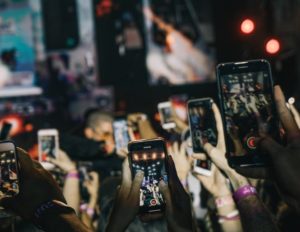
Social media apps benefitted hugely from the pandemic, too. TikTok experienced huge growth during the pandemic – from 3 million UK adult visitors in September 2019, to 14 million by March 2021.
When I really thought about why my mind gets so caught up in the whirlwind that is social media, I realised it really does come down to 3 simple things:
The first one being FOMO or fear of missing out. For a lot of people Instagram, Snapchat, Facebook, TikTok, etc… are where we build our links with most people. It’s where conversations start; it’s where we build links with people who share the same interests and values as us; it’s where we get the new ideas of places to visit, eat, see, and what to watch on the telly. I know I would have never tried Squid Games off my own back but the influx of tweets raving on about it sparked my interest. We use social media to share the best parts of our lives. If we didn’t have social media, these connections would be lost, and we would be left wondering what connections and shared experiences people are having without us.
The second one being validation. When we post a picture, we get notified about how many people have liked the post, the more the better. If you were to post on someone’s feed who had a large following and they responded or just even liked the post, you would feel proud. As adults we all need validation. It’s just part of human nature and social media enlarges that – we don’t have to do anything amazing, just sit behind a screen and hope a few people press the like button. When lockdown limited our opportunities to engage with family and friends in person, social media offered us the virtual alternative.
The third and final thing is comfort. I know it sounds ridiculous; how can you find comfort in something that nine times out of 10 gives us a headache. But when you think about it, it’s giving us comfort and familiarity in an unfamiliar setting. Sitting in a restaurant waiting for a friend, attending an event with strangers, social media gives us a way to connect to social objects and to people that we know, so we feel less alone or uncertain.
I do believe lockdown had a dramatic change on everyone’s intake of social media so maybe that’s harder to let go of. But it’s important that we establish relationships outside of social media and that we realise we might be so busy obsessing over what we are missing out on social media, that we are actually missing out on what’s going on right in front of us.
Since the birth of the internet, cyber security has been a growing concern for businesses around the world. The number of cyber attacks has steadily grown year-on-year and experts predict it will carry on this way for the foreseeable future. In addition, cyber criminals are becoming increasingly sophisticated – they can find the smallest weakness in a network and exploit it without the company even knowing.

But it’s not all bad news. There has been a boom in the cyber security industry and companies reinforcing their cyber defences. Reports suggest that the UK cybersecurity industry is growing at a rate of over 20% a year with the global market projected to reach $258bn by 2025. With such a competitive landscape – how can cyber companies stand out from the crowd?
One of the best ways is to invest in cyber security PR. This helps increase brand awareness, showcase expertise and drive leads. But with such a crowded marketplace, how do you stand out from the rest?
Here are my three tips for developing an effective PR campaign in cybersecurity:
Understand your audience
The first thing you need to do when considering PR is to understand your audience and who you’re trying to influence. In the past, cyber security was not considered a board issue, it was left up to the IT director or manager to control. But with the ever-growing threat to companies and the risk of hefty fines from regulation such as GDPR, it has now become a top priority for the C-Suite.
There are now multiple decision-makers involved in cyber security strategy and purchasing decisions, so you need to create messages that suit each audience. Messaging that resonates with IT leaders isn’t going to have the same impact with the C-Suite. Your IT audience will be able to understand the technical jargon, whereas the C-Suite will be looking at the overall importance to the business and how it impacts the bottom line.
Once you understand your audience, you can then identify the target media you need to engage with to reach them. For example, while tech and cybersecurity titles may be best for your IT decision-makers, you may want to consider broader business and national titles for business leaders, adjusting your messaging (and tactics) to ensure the content engages and resonates with the right pain points for that audience.
Define your PR strategy
Cyber security dominates the media headlines; whether that’s a company experiencing a breach or another receiving a fine for misuse of sensitive data – there’s rarely a week that goes by without some form of cyber attack in the news. When appointing a PR agency you need to know that they have the right relationships with the media so that they can get you to the front of the queue when journalists are looking for experts to comment. Speed is key when reacting to breaking news, but some groundwork needs to be done so you can make the most of this PR opportunity when it comes about. This could be through building the profile of your spokesperson with the media so that journalists think of you when an opportunity to comment comes up or having the views of your subject matter experts documented to help with drafting comments.
As well as developing a process for reacting to breaking news stories, you also need to consider your proactive PR strategy. Ensuring the agency truly understands your business objectives will be critical in defining a compelling content strategy, storylines and PR programme that will resonate with your target audiences. It’s also important to identify which areas of the industry you want to target and have a voice in. Then you need to ensure that you are creating content with intent in these areas to establish yourself as an expert.
Be bold
Finally, there is a lot of noise in the cyber security industry. Most industry players are saying similar things and it can be hard to stand out from the crowd. It pays to be bold with your statements; just because 90% of cyber security professionals are saying the same thing doesn’t mean that you should follow. By developing an alternative perspective on an issue, challenging misconceptions or making predictive or bold soundbites, you can stand out in the media and increase your awareness. The important thing here is that your PR agency should be able to help you find your niche; balancing your messaging and objectives with what your audiences (and the media) need to hear.
If you’d like to hear more about our approach to cyber security PR or how we’ve helped similar clients, then please get in touch.
By Ellie Nash, Digital Account Executive
Whether your business goals are growth, boosting customer engagement or reaching new audiences, social media has a definite role to play – especially used in concert with your wider PR and marketing plans.
But where do you start?
Here are our four tips on improving your social strategy, reaching your social media goals, and improving your online presence.
Connect with Industry Influencers:
Connecting with industry influencers/creators is an important part of enhancing your online presence. You can do this through engagements.
Engagements are where you or your organisation will interact with an industry expert in your field of work who is currently discussing a hot topic that has relevance to your organisation/the services you provide. For example, if you were a healthcare organisation and the Minister for Public Health tweeted something that you feel you could contribute to or provide a valid solution to, don’t hold back, get involved!
Here are some of the benefits:
- Engagements drive more conversation. Especially when reacting to a post with a question, you leave the door open for not only the author of the post to answer but also others viewing the post.
- Engagements pose a greater opportunity to grow followers. If the author responds or others respond to the engagement, they may follow you, especially if they agree with what you’re saying about the topic.
- If your organisation links a blog or whitepaper to the conversation as a solution, this increases the chance of more views and overall engagements.
At Whiteoaks, we would recommend making most of these engagements on Twitter. Twitter is more conversational, casual and is more seamless to find trending hashtags that apply to your industry. If you are planning on engaging with an influencer or creator, possibly consider ending your engagement with a question, such as, ‘What are your thoughts on this?’. This encourages more opportunity for the individual or others to get back to you and get involved.
Use MORE Video:
As the millennial and Gen Z attention span decreases, the demand for short and snappy videos increases. According to a recent infographic by Social Media Today, the average attention span of this generation ranges from 8-12 seconds… And that’s why short-form videos are key!
Now, we’re not pleading with you to set up a TikTok account but keep in mind that short, snappy videos are the way of the future. Videos are becoming so attractive to audiences as it allows them to digest information from videos that are long enough to catch their attention and short enough for them to leave them wanting more.
For the most part, this is a chance to show off the personality of your business, the talent of your team and the fun you have within the office.
Here are a few examples of content that we would recommend you post, depending on the type of business you are:
- How to’s
- Meet the team
- Product highlights
- Humorous videos (get involved in World Hot Dog day or April Fools!)
- Influencer marketing
… These are only a few examples of some of the content that could make your business go viral, be creative!
Implement Paid Social:
Why should you use paid social? It’s not just used to boost organic content. It’s a lot more targeted than that.
So think about targeted content like eBooks, webinars, and whitepapers, leveraging your best content. You can use these to fuel your paid campaigns across platforms, such as Twitter, LinkedIn and Facebook. With LinkedIn specifically, there is the opportunity to be really targeted across personas, industry, job title, age, geography, company size… the list goes on. You can use it to find and engage with new audiences.
The key thing about these types of targeted campaigns is that they can be measured, and you can determine your ROI. While paid gets the quick-fire results based on specific campaigns, having organic running concurrently building your brand story and presence provides longevity.
Using both paid and organic social media together makes sense. And when you’re using social as part of a larger PR and marketing strategy, they pack a powerful punch for reaching those objectives – be it lead generation, brand awareness or expansion.
Start using a Social Media Calendar:
Social media calendars are essential to keep your team and content on track and heading in the direction you want it to.
Google sheets is great for hosting your social calendar.
Here are a few of the benefits of implementing a calendar to your strategy:
- Ahead of the next month’s activity, you will go into the document and write in the note tab what needs to be promoted and on what day throughout that calendar month. This keeps everyone aligned with what needs to be pushed onto social, at what time, and on what platform.
- If the social media ideas/blog links are provided a week in advance of writing the schedule, it gives the team time to look through the link and formulate a post. This reduces stress and improves efficiency.
- You will gain more engagement and interaction on posts that you have crafted for specific channels. Rather than copying and pasting the same post over to all of your platforms, use the calendar to review what was posted last week, what went well and what to post the following week. Taking time to fit within the character limit of Twitter whilst also developing the information for LinkedIn.
Social media is an ever-changing world so expect to see a lot of new development in 2022 and make sure to take note of the brands that are harnessing these trends.
By Angelo Suanno, Junior Account Executive
In an ever-thriving technological world, the hybrid working model has forever changed the foundations of office-based jobs. The impacts of hybrid working are a point of discussion for many, predominately concerning physical and psychological wellbeing. However, according to recent news headlines, energy bills are set to slowly rise in price over the coming year. How will this affect people’s decision to work from home? Will this see an influx of people returning to the office? Is there anything we can do? – yes there is!

Here are the three tips to lower energy consumption in your home without impacting your quality of work.
#1 The sun is our friend.
The overwhelming desire to instantly turn on the lights in the morning, or at the first sign of impending darkness may be powerful, especially during the winter months. However, resist the urge for as long as possible, open the curtains fully and allow natural daylight into your home. Not only will this help reduce energy consumption and warm you up at home, but as a bonus, exposure to sunlight has also been shown to correlate with happiness and positive wellbeing. Remember: the sun is your friend.
#2 Standby still means on.
There is a growing concern that working from home has resulted in our monthly energy bills spiking ever so slightly. Leaving the laptop on for several hours a day or using an additional monitor to increase work productivity still has a cost, and who pays that cost, those who work from home. To prevent any unnecessary power drainage, don’t shut the laptop display or leave the monitor on standby overnight, turn everything off at the source when not in use or at the end of the day. It may not always be convenient to switch off during your lunch break if you’ve got a meeting straight after, try using power-saving mode to save you time and money.

#3 Wrap up, don’t crank up!
With the cold winter nights nearly at an end, it will almost be time to stop using the heating, but not just yet. While working from home may provide the opportunity to dress less formally from the waist below, resist the impulse to turn on the heating immediately after the first few cold shivers. Instead, layer up on clothing or rest a blanket on your lap, that way you’ll remain comfortable, warm, and formal, while also saving energy.
To sum up, in addition to the physical and psychological impacts of the hybrid working model, there will be a surge in both ecological and financial effects due to the slowly increasing energy prices, in the coming year. Will people continue to work from home knowing the extra price they’ll have to pay? What sacrifices will need to be made to maintain a balance between a professional yet sustainable working environment? Whatever the answers are, hopefully these tips will help you make your decision.
By Susan Richter, Marketing Communications Manager
It’s fair to say we’re a cynical bunch when it comes to being a consumer. After all, we’ve had a lot of practice. We know phrases like “never seen before low prices” and “wait…there’s more” are mostly hype, and we know BOGOF doesn’t always translate into better value.

What about as business consumers? Especially marketers? Ramp that cynicism up to the max! We know all the tricks and which questions to ask. We can see through the marketing hype, which makes us better at scouting out value and finding what we actually need. At least it should!
But it also means that as marketers marketing to fellow marketers, we need to be spot on because we’re a far less forgiving bunch. It’s a bit more complex than making sure the content is relevant to the target audience, timely and has value. It’s about getting the little things right, being smart and continuously striving for improvement.
Without sounding too sanctimonious or naming and shaming, here’s my list of things to avoid based on real examples:
– Don’t tell me you’ve prospected with care and then ask if I am the right contact to approach
– Personalisation is great; but don’t talk like you know me. You can be friendly and engaging without being creepy!
– Don’t send a follow-up email to a mythical first email. Even worse, don’t send a follow-up email three hours after the first one
– Don’t try sell me things that are clearly not appropriate for a PR agency or part of our offering – like a listing on Amazon or social media services
– Pay attention to your preview text and make sure your subject line, even if the email is valid, doesn’t sound like a phishing email or clickbait
– Don’t send the same email twice from two different salespeople
– Don’t send the same email to me a few weeks apart featuring the same spelling mistake!
– I appreciate some may like this approach, but don’t ask me to click on your diary to book in a call! You want it? You need to work for it.
And finally… proofreed…proferead…proofread. Don’t let grammar issues, typos or blatant misspellings creep into your emails!
All that said, I am not a complete grump. I do enjoy a good sales email, even when the content / service on offer isn’t that relevant to me. I received a great message the other day that was self-deprecating (yes, I am aware it was the author not the message 😊), honest and quite funny.
“Hi Susan – bumped into you on LinkedIn and I was hoping to try and strongarm you into a dull and monotonous pitch where we can bore you to death on the wild tales of our many digital successes.
Not really, but my boss told me to try some varied approach methods – not sure that one will stick.”
Now that is something I can appreciate!
By Richard Garfield, Specialist Content Writer
Over the past couple of years, businesses have had to quickly adapt and change the way they promote their products and services. While the ever-changing marketing landscape may seem daunting, here are five key trends to keep an eye on during 2022 to ensure your content marketing plans stay on track.

#1 Empathetic marketing
Recent events have led marketing teams to take a more empathetic approach, which we are likely to see continue throughout 2022.
It’s a way of seeing your customer through their eyes and speaking to them as people and not simply as potential buyers. To do this you need to be clear who your customers are, what challenges and pain points they face and what motivates them into action. Answering these questions will be useful in producing content that evokes relatable emotions which will build trust, create better customer experiences and develop more authentic relationships.
#2 Hyper-personalisation
It’s well known that customising messages will improve customer engagement, especially when it comes to email marketing.
While this has become pretty much standard practice, a newer trend is now emerging with hyper-personalisation. This goes deeper than simply using a customers’ name as it taps into an individual’s preferences, desires and needs.
Basically, this uses data to deliver more personal and tailored products, services and information to create unique interactions with individuals. Hyper-personalisation can increase customer loyalty and create more enjoyable interactions.
#3 Shorter video content
During 2021 video content became a central part of many content strategies. TikTok alone grew by an impressive 173% and with Instagram embracing a shift towards video, so the importance of video content will surely grow in 2022.
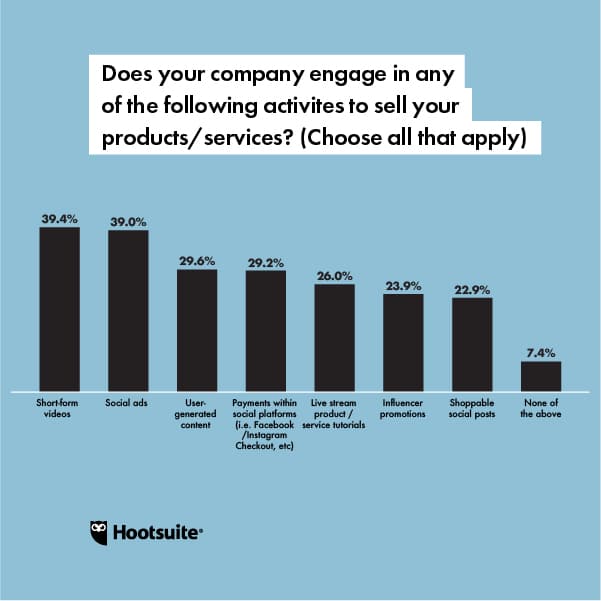
As average times for watching videos continue to fall, short videos suit fast-paced social media platforms. According to Hootsuite just over 39% of businesses already use short video content to sell their products and services, with 30% reporting that it provides a higher ROI than their own websites.
When done well, video can create a deeper connection and capture the attention of potential customers more readily.
#4 Audio content and podcasts
Audio content has become more and more popular in part due to podcasts which are available live or on-demand. In a recent survey from HubSpot, 80% of businesses polled said they plan to invest either the same or more into podcasts and audio continue for the year ahead.
We expect this trend to continue in 2022 with more content that is directly linked to a brand being available as they are a great way to share information while listeners are doing other things such as driving to work, doing household chores, or working out.
#5 Optimising content with infographics
We expect to see the trend of consumers actively choosing content with visual displays such as infographics over content that is purely text in 2022.
Studies have shown that people can process images 60,000 times faster than text and in the same vein, people tend to remember only 10% of information through sound, while they remember up to 65% of information they see visually.
While images can be powerful on their own, when mixed with text they have even more impact, as audiences respond well to the combination of words and images. Articles with relevant images receive 94% more views compared to articles without images. Well-designed, attractive visual content, such as infographics, photos and animations, can increase visual interaction with consumers can drive emotions and help them along with their buying decisions.
Content teams must keep abreast of key marketing trends if they want to attract and retain their target audiences in 2022 as after all creating exciting content is what gets businesses and their brands noticed. However, this does not mean they can simply jump on new trends and ignore basic marketing practices, as without a unified content and marketing strategy this is unlikely to pay off in the long run. Making sure your content and marketing is aligned with the rest of your business and by clearly defining your marketing goals, will allow you to make the most of these trends.
If you have any questions or would like some help with your content marketing, get in touch with us.
Hannah Buckey, our Head of Content chats to us about her experience of working at Whiteoaks and the path that led her here.
Ross Walker, Head of Digital & Social, shares his trends to watch out for in 2022 by looking back at this year, dissecting the social media landscape and looking even further ahead than 12 months.
It’s that time of year when the mystics grab their trusted crystal ball and take a long hard look into the future. For those of us in B2B PR & marketing, that approach just doesn’t work! Instead, we rely on educated guesses and the wise words of our experts.
We asked our Creative Director, Mark Wilson; Head of Content, Hannah Buckley; and Head of Digital and Social, Ross Walker for their take on what to expect from next year.
Mark on creative
#1 Focus on video and animation
We all had to work within the confines of the pandemic which meant finding other outlets or avenues for creative. Things like photo shoots, for example, couldn’t happen, so we had to find alternatives. Which is where video and animation shone and as a result, we can see can more of this next year. We are also going to see the use of video and animation in different media and areas, and across different platforms. Just look at the Channel 4 reality series that was produced exclusively for broadcast on Instagram.
#2 More green
Obviously there’s been a lot of focus on sustainability, not just because of the recent COP26, and I think will influence all areas next year. More brands will be shouting about their credentials and efforts next year – and will be pressed to prove it. But more than that, there’ll be pressure in the digital sphere to prove sustainability; how can digital brands be more energy efficient. If you consider the internet produces nearly 4% of the world’s greenhouse emissions, there is definite work to be done.
#3 Return of the DM
No. Not the direct message. I’m talking more old school. The direct mail. While direct mail like junk mail has had a steady presence in our lives, it will be the desk drop that is staging a comeback. This can be used as a way to get your brand to stand out, be more personalised and targeted. I think it’s just a really ripe area for creativity, especially because people are tired of receiving emails marketing emails, dozens a day. As we hopefully make a return to our offices next year and away from being in front of our screens 24/7, a physical, tangible thing will be well received.
Hannah on content
#1 Increased demand for a wider variety of content types
In today’s time-strapped environment, people are a lot more selective about what they consume, which has led to greater demand for videos and podcasts, to supplement more traditional types of marketing and PR content. These types of content are easy to digest, can be more widely shared and reach more audiences while staying true to the brand’s messaging.
#2 More data-driven content
This is really a circular thing and recognises the role content plays in the bigger picture, in terms of company goals and objectives.
With this, there will be more of a move towards data informing the types of content being created and at the same time there’s a push for content to provide tangible results that can be evidenced with hard data to show how content is helping to meet those company goals.
#3 More brands sharing more opinionated content
This is a more upfront up front way to engage with audiences, particularly as people are now a lot more discerning and know when they’re being sold or marketed to.
With that, some brands are being bolder with how they communicate with their customers and prospects to cut through the noise and make their voice heard.
This approach requires businesses to strike the right balance between being outspoken and potentially controversial, and remaining true to their brand’s messaging and values.
Ross on social and digital
#1 Employee advocacy
The term has been used quite a lot and it’s becoming more and more important for brands to adopt these programmes into their marketing. Essentially it’s about leveraging employee networks to promote the brand, ensuring they’re amplifying the messaging. But…all in a meaningful and authentic way! The obvious benefits are brand awareness and transparent engagement with target audiences. In addition, LinkedIn for example, is more inclined to push individual posts and content over those coming from corporate pages.
#2 Evolution of paid social
Next year it’s going to be more important than ever to stand out and leveraging paid social campaigns can really be beneficial, especially around brand awareness and lead generation. It’s a great way of building engagement and being more targeted. It does need to be underpinned by a solid content strategy to make sure your audience is consuming that content and interacting with your brand.
#3 Bet on organic social
With all the changes that have happened this year – enter the Metaverse! – there’s no guarantee that organic will continue to be effective; especially with the focus on paid and the fact organic reach has been steadily declining over the last few years. However, organic still has a definite role to play so we’ll see brands taking full advantage of that.
If you have any questions or thoughts on the trends, let us know! Or get in touch if you’d like to see how you can capitalise on them in 2022.