When the UK AI industry gets together later this month at AI & Big Data Expo, we expect big things about its growing influence on key issues such as cybercrime, process automation, retail, healthcare and customer experience – all areas in which we have clients actively working in.  However, amongst this anticipation to hear about new and exciting innovation, we hope to hear that ethical AI is woven throughout all aspects of the conference agenda.

This is a topic that is gaining momentum, but with AI still something of a catch-all term, many industries have not yet moved on to this crucial next stage of the debate.

To provide some context, Professor Klaus Schwab, Founder and Executive Chairman of the World Economic Forum, is the author and co-author of two best-selling books[1] on one theme: the fourth industrial revolution (4IA).

The first three revolutions all had some form of production as the benefit. Number one combined water and steam to create mechanical production, and the second was led by harnessing electricity to allow us to mass produce. The third mobilised electronics, computers and IT to automate production.

We have, for a handful of years, existed in the fourth revolution – and it’s one where large-scale iteration in production isn’t the single outcome. This revolution is really quite different. Professor Schwab wrote that this “is characterized by a fusion of technologies that is blurring the lines between the physical, digital, and biological spheres.”

It is impacting almost every industry in every country – developed or otherwise – and creating change at a speed humanity has never before experienced.

41A has opportunities with risks which need to be proactively managed, and artificial intelligence (AI) is increasingly the glue that enables various technologies, devices, applications and systems to deliver the opportunities we are only just starting to realise. At the most fundamental level, AI is already showing signs of improving our world, extending to people’s lives, wildlife, as well as our climate. It’s truly democratic in its potential and applications. And they are vast. PwC research says that AI will provide $15.7 trillion in global economic growth by 2030 and in the UK it’s expected to contribute an additional £232bn by the same year.

PwC breaks down the scope of AI into four key areas:

  • Automated intelligence: Automating manual, routine tasks;
  • Assisted intelligence: Performing tasks faster and better;
  • Augmented intelligence: Helping people to make better decisions; and
  • Autonomous intelligence: Automating decision-making processes without people.

Across these four aspects of AI, commentary centres on ensuring ‘safe AI’ – where those key stakeholders I mentioned above are collectively responsible for ensuring it’s developed and implemented to align with general human values.

One of the key risks focuses on social ethics. And it’s a broad issue that is increasingly and encouragingly gaining greater traction and visibility in international discussions in the US and in an upcoming Bias review by the UK Centre for Data Ethics & Innovation. Businesses, investors, policy-makers and the public are all involved with responsibilities. We must collectively learn from the recent scandals which stick in the mind, such as Cambridge Analytica, something which author Bernard Marr has explored in a recent article for Forbes.

However, much like big data in the last decade, a lot of the talk around AI in B2B applications is what it “could do” – it’s largely hypothetical and all about the possibilities. And demand for those possibilities is high. As recently as December last year, $322 million was raised for B2B startups in just one week. Time will tell, but we now need to move on to ‘how’ it should be adopted – and I think responsibility plays a key role in this.

[1] The Fourth Industrial Revolution (January 2017) and Shaping the Future of the Fourth Industrial Revolution: A guide to building a better world (November 2018)

Technology has become one of the key drivers of social evolution and has been embedded in every aspect of our day-to-day lives. Since the launch of the smartphone around 15 years ago, I have seen first-hand how technology has transformed the way we interact with each other, how, as just two examples, it has opened our eyes to new methods of education and how it has provided us with the tools to take healthcare into the palm of our hands with wellness apps and fitness trackers.

I must confess, for me technology is both a blessing and a curse. I have mastered the art of procrastination by mindlessly scrolling through social apps; but I have also witnessed the benefit that technology can bring to everyday living, and how this can transform the most mundane of tasks into something interactive, engaging and ultimately enjoyable.

Take dating for example – since the mid-1990s the internet has revolutionised the way we network, meaning it is possible to e-meet a potential partner through social media and online dating sites such as eHarmony and Match.com. It’s an industry that’s expected to grow even further, with predictions stating that online dating will contribute more than £265 million to the UK economy by the year 2030.

As digital social interactions become more commonplace, it means that all types of relationships can thrive with the aid of technology and topic-based communities are able to come together without the boundaries of location. It offers social satisfaction without having to leave the house.

However, like all things in life, moderation is key. According to Market Watch, on average adults spend 11 hours per day watching, reading, listening to or simply interacting with media on one screen or another. The negative effects of excessive usage continue to hit headlines on a monthly basis.

Luckily, there are functions in place on most smartphones that can help you track your screen time and apps that encourage a balanced lifestyle. The Headspace app is a winner as far as bringing the practice of meditation to the masses, with scientific studies listing mental acuity, patience, productivity and sleep as just a few of the benefits associated with meditation. Another great app, Fooducate, works by offering users a personalised nutrition and ingredient analysis by using your phone to scan product barcodes. This is an increasingly popular method used by brands to make the experience more interactive so it resonates with the user, making them part of the experience. It perfectly demonstrates how the integration of technology can fit so seamlessly into your life.

With this in mind, I think that when it comes to the effects of technology on our lives, we need to accept that the world is becoming more digitised and that it is moving forward at a rapid pace. But when we want to slow down for a second and take in everything and everyone in front of us, here are a variety of apps that will limit our smartphone use – the true exemplification of how technology can help us achieve balance after all.

Are you a value-adding brandividual utilising holistic storytelling to leverage your influence and drive agile new synergies? Or do you, like so many others, recoil at the very sight or sound of too many buzzwords?

Type the term ‘buzzwords’ into the Google news tab and you’ll find countless articles decrying their use. Many of these articles appear to be responding to LinkedIn’s ‘Buzzword Beaters Bracket’ launched earlier this month, which has generated, well, quite a buzz.

Presenting a fresh spin on the brackets used to keep track the progress of teams in sports tournaments, the Buzzword Bracket plays common buzzwords against each other to find the most annoying of the bunch. The winner (or loser) that surpassed all other contenders in irritating people the most was ‘disruption’.

For those who aren’t in the know, a buzzword is a word or phrase, often labelled as jargon, that is fashionable at a particular time or in a particular context. You could argue that ‘buzzword’ is in itself a buzzword.

In B2B tech PR, buzzwords are used often and in abundance. Once they enter the business lexicon, they represent a meaning that is universally understood. Rather than taking a whole sentence or paragraph to build context, you can do it with just one or two words.

For example, in supply chain management, the term ‘digital decisioning’ has become widely adopted as a way of referencing the process of making crucial business decisions based on insights that are informed by real-time data from various touchpoints across the supply chain network.

Imagine having to read that description every time a piece of content references the practice of digital decisioning. As the term has entered the lexicon it has become commonly used in content written around supply chain management.

In B2B content it pays to be direct. Buzzwords allow you to do this by writing more concisely while continuing to demonstrate value to the reader. However… there’s a big but…

Sifting through the countless articles that call for the banishment of buzzwords, the reason they’re so reviled becomes clear: people feel they are overused and lack originality. Of course, creativity is key to making your content original, engaging and thought provoking. But this has to be balanced with directness and functionality that gives your content purpose and drives your messaging home to the marketing personas you’ve defined.

And that’s exactly what buzzwords can be: direct and functional. Unfortunately, they’re most often overused, sending readers running and causing confusion about what the brand is really trying to convey. It’s why we ourselves recently set out to ‘break up with the cloud’ in a recent campaign we ran around Cloud Expo Europe.

Our view is that buzzwords can play a limited, focused and purposeful role in grabbing attention and signposting in virtual flashing lights what a piece of content is going to broadly be about. But when it comes to the heart of your content, use purposeful, tailored messaging that resonates with your audience instead of relying on the fallback of the buzzword.

We all know content plays a critical role in your PR and marketing strategies – forming the foundation for audience engagement and ensuring the right messages resonate with the right audiences. But what about when it comes to events? Your events calendar is most likely full of exhibitions, seminars, roadshows and conferences. Do you consider a content strategy to be vital here? Does it influence your tactics?

The answer to both questions should be yes.

These events are not isolated instances. They should be tied together by an overarching strategy that supports the marketing and PR goals of your business. In the same vein you need to ensure your content strategy does the same thing; joining all events together with a unified theme across the visual representation, presentations, collateral and event communications.

Whatever that may look like, by developing content in advance, you can use it to feed into activities, guiding sales teams on the ground, providing insights for spokespeople to deliver during presentations, and supplying valuable information to customers and prospects pre, during and post-event.

Strategy: setting the tone with theme and narrative

A good starting point is to review the objectives for the business and the marketing strategy for the year – and develop a theme aligned to these goals and the audiences you need to engage and influence. The theme then helps you develop your narrative, what you want to say and how you want to say it. In its simplest form, this all about storytelling; taking the audience on a journey, by capturing and keeping their attention with a valuable message that resonates.

The narrative will inform the tactical selection and determine what types of assets are needed and what they need to accomplish. Importantly, it’s not just about setting the scene at the event with the right messages, your narrative needs to stretch across the lifecycle of the event.

Relevance: the heart of your assets

The permutations of content are endless, from social tiles, infographics, blogs and emails, to eBooks, whitepapers, guides, top tips and video snippets. But what remains the same is the value they bring to your end audience; the content needs to be relevant, demonstrate that you understand their industry, their challenges and have the solutions to address those issues. More than that, your storytelling needs to engage readers and be less about selling to them and more about helping them solve their business problems. This in turn will build trust with your brand and keep it front of mind when an opportunity arises.

Tactics: delivering the content

Your content assets will vary from event to event, dependent on the aims of each. To illustrate an example, for the launch of a piece of propriety research, you could use a news release to generate industry coverage supported by interactive social tiles to create awareness across digital channels and use select statistics for a direct mail campaign to prospects, to tease the upcoming launch and drive registration to the upcoming event. The research report could then be exclusively launched at the seminar during speaker presentations and interest captured (a lead generation opportunity) to receive a full copy.    Finally, post event you could stage a webinar based on the key findings and supported with a series of blogs to continue to recycle the asset.

If the aim of your event is to further amplify your messaging, increase awareness and win share of voice at a busy show, you could use your narrative to create hype based on what you’re doing on stand and use interactive pieces of content like live demos and video, supported with social promotion live tweeting and blog content. Post event, you could release an exclusive eBook based on solving an industry challenge that’s linked to the key concerns for prospects.

Related: Event Series – Turning an event into a prime media relations opportunity

Related: Event Series – Getting the most out of your social media strategy at events

Related: Event Series Webinar – Redefining event marketing: Plan for success

Follow-on: moving beyond the event

The great thing about the assets you create as part of your content strategy is that they can be used before, during and after the event. They can be repackaged and re-purposed, and used for related (or follow-on) marketing and social media campaigns. Whether that’s giving prospects access to a hero piece of content, such as an eBook or whitepaper, or inviting them to a webinar or podcast and carrying on with a blog programme, your event content strategy can help you achieve the results you’re after, reinforce your messaging and guide prospects through the sales funnel.

Susan Richter, Head of Content

Tell Us Your B2B Tech Story

Read our eBook, ‘Making the Most of Industry Events’, and click here to download.

Events are an excellent way of reaching your customers and your prospects — that’s a given. But they also represent a prime opportunity to engage with journalists and play a crucial role in the media relations mix, enabling you to build relationships and generate positive coverage.

That’s not to say you need to move away from the traditional tactic of setting up interviews for key spokespeople — but there are a number of alternative creative approaches you can use to interact with the media, introduce them to your spokespeople and brief them to ensure your business is getting the right messages in the right publications read by the audiences you need to influence.

Make it compelling

Much like how a content strategy guides your narrative and approach to events, your media strategy should dictate what you do at an event. Engaging with the media can be a powerful tool for your business, but the key thing to remember is that you need a reason to get them there. Journalists are news driven and looking for strong opinions and compelling content they can use to shape the news agenda.

If you have major news with significant industry impact such as an M&A announcement, for example, then going down the route of setting up exclusive pre-briefings with top tier press is absolutely the way to go.  Briefing key contacts in advance ensures the journalist is well prepared and they can develop their story to publish as the news is launched at the event. The coverage will quickly amplify the story and adds additional credibility to the announcement.

But you could take that even further and host a press conference live from the event to officially announce the acquisition, with an interactive media Q&A facilitated by a leading industry commentator, to provide real-time comment and reaction to generate immediate hype and coverage.

You could also look to broaden your horizons by hosting a roundtable event structured around a key industry topic or the release of a piece of research, bringing in not just your own spokespeople but independent influencers and customer advocates and using this event within the event to own the agenda.  Providing media with access to independent speakers gives an additional hook to attend and a greater pool of opinion for the journalist to access. This type of event could easily be tagged to an existing forum to save costs, including venue hire and travel for spokespeople.

Related: Event Series – Content comes first: reviving the lost art of event storytelling

Related: Event Series Webinar Summary  Redefining event marketing: Plan for success

Make it creative

A company’s own flagship event can sometimes be ruled out from a media perspective, with clients concerned about mixing customers and prospects with media attendees.  However, creating a dedicated press track gives the opportunity to give journalists access to the most compelling content, for example, keynotes, customers and future looking technology updates.  Arranging an exclusive lunch with the CEO or a site visit to a nearby customer for a chance to see a real-world implementation in action adds a different element to the agenda.

Of course, if you’re not going to have strong news for every event, you need to find creative ways to get that engagement and ensure you’re getting the best mileage out of your PR budget. The question is, how?

Consider hosting a breakfast briefing, taking place before the event, close to the venue. The two main elements here are making it easy for journalists to attend and giving them something of value once they are there. This could include views on upcoming trends, strong opinions on the industry or commentary on the future of the business.

Then of course there’s hosting casual drinks on stand or inviting journalists around for a swing by.

The value from these sorts of engagements is two-fold; first, while you may not have news to share, you’re still getting your spokespeople in front of journalists for an informal chat about the show, the industry in general and upcoming trends. Second, the conversation goes both ways. Just as journalists are discovering more about your company and your take on things, even on an informal level, your spokespeople gain an understanding of the journalist’s view of the industry, the future and what topics they are currently writing about or interested in.

These types of meetings are likely not to yield immediate media coverage, but they can help shape future engagements and provide ideas for future content and thought leadership opportunities.

Related: Event Series – Getting the most out of your social media strategy at events

Related: Event Series Webinar Summary  Redefining event marketing: Plan for success

Make it count

The success of your event is a culmination of months of hard work, but it doesn’t end there. Regardless of the engagement, whether a formal interview, a meet and greet, casual drinks or a press conference, it’s important to follow up with journalists, thanking them for their time, checking if they have all the information need – and you’ll be investing in that relationship for the future.

Charlotte Causley, Account Director

Deliver Integrated Campaigns

Read our eBook, ‘Making the Most of Industry Events’, and click here to download.

Whether it’s your annual flagship event where you own the event agenda, a leading industry expo where you will be exhibiting alongside competitors, or you’re attending a small local seminar, planning your social media strategy from the start will help give you a greater chance for success.

Engage, engage, engage

The first guiding principle when developing your social media strategy for events is focusing on how to engage with your target audience and not just broadcasting what you’re doing. While the latter certainly does play a role, overall it’s about using content that will resonate with customers and prospects to drive engagement, much like you would in your content strategy or in the material that you pitch to the media.

The second guiding principle is understanding the digital lifetime value of the event — this will always be greater than the duration of the event itself. Consider the size of what’s being announced and who’s attending. You also need to look at which platforms you own, when they should be introduced to your content, and what features you can take advantage of.

Strategy, narrative and your audience

Your social strategy should be designed to help you meet key objectives; sign up to an event, drive footfall to a stand, generate interest, create hype, or a combination. The key is to define the objective upfront, create a narrative and key messages that need to be incorporated in all your efforts throughout the lifecycle of the event.

Knowing who you’re targeting plays a crucial role when considering your social media strategy, so take a look at your existing social media following and determine whether you’ve built up the right followers for your event. If not, it’s not a problem, just be prepared to put extra effort and spend behind your social media tactics potentially with a hyper-targeted paid social media campaign to reach your desired audience(s).

Different support layers, different objectives

Of course, there are different levels of social support depending on the objectives for the event. For an intimate roundtable of invited clients at your own offices discussing industry challenges, for example, a pre- and post-event campaign isn’t necessary. You could tweet selected anecdotes or quotes from the evening as an awareness building exercise with some supporting images to bring the conversation to life.

Whereas for a major exhibition or tradeshow you’d need a comprehensive strategy that covers before, during and after the event. Again, there are various levels of support that can be included here; from building momentum and interest in the event as part of a larger content market campaign, to live tweeting with key takeaways to engage with any of your target audience who aren’t in attendance, to promoting assets after the event that visitors to the stand (customers and prospects) would gain value from to amplify your message and continue the dialogue.

Related: Event Series – Content comes first: reviving the lost art of event storytelling

Related: Event Series Webinar Summary  Redefining event marketing: Plan for success

Use your best ambassadors

There are always opportunities beyond your company’s own social media channels. For example, do you have any employees attending the event whose social media channels you can tap into? If you do, it’s a good idea to clearly brief your employees with how they can contribute to the social story, include key messages, event hashtags and a few gentle social media reminders on best practices. Do you have any customers or guest speakers with a good social media following that you can leverage as part of your PR, digital and social media strategy to further amplify your message?

So what does a typical event social support programme look like?

Before the event

  • Formulate the objectives, narrative and key messages in collaboration in your PR and marketing team
  • Drive awareness and build a buzz about the event through teasers about the speakers and content
  • Start to drip-feed your key messages for the event with the creation of an event landing page, video snippets or blogs which can be actively promoted across social channels
  • Create a suite of branded and interactive social media tiles will help to promote pre-event content and raise awareness to drive sign-ups.
  • Brief your team and external speakers, providing social media guidelines to help them amplify the event content

During the event

  • Engage with people attending the event by using the show hashtag
  • Blend your offline activities with online to create an integrated approach, run Twitter polls alongside speaker sessions for on-demand engagement
  • Share the event with those who couldn’t make it by telling them what’s happening on the stand, key announcements and presentation slots
  • If you’re at an industry event, include key insight from other presentations and what’s trending at the show balanced with your key messages.
  • Create content live from the show (e.g. demos in action or interview with key spokesperson) to generate interest from prospects and drive footfall
  • If you’ve got a big announcement planned, look to highlight it with live social media coverage or a video Q&A.

After the event

  • Promote content from the show and after thoughts for follow-up event activity. For example, uploading a presentation to SlideShare is great for your website SEO
  • Create content assets linked to the interests of the attending audience to use for post-event promotion and continue the dialogue
  • Report back to the business on key social metrics aligned to business objectives and new lead opportunities that have derived from social media

Related: Event Series – Turning an event into a prime media relations opportunity

Related: Event Series Webinar Summary –  Redefining event marketing: Plan for success

Final thoughts

When it comes to events, large or small, never underestimate how many minutes there are in a day. The majority of your event’s social media success will be down to how much planning you’ve done upfront for each of the three stages I’ve outlined, but also be prepared for the unexpected and be ready to jump on that next social opportunity as it arises

Emma Walker, Digital Account Lead

Tell Us Your B2B Tech Story

Read our eBook, ‘Making the Most of Industry Events’, and click here to download.

In 2019, B2B PR and communications is less about direct corporate messaging and more about sharing an interesting, relevant and insightful story for audiences and remaining relevant to the client’s sector and area of expertise. The industry is continuing to grow in 2019 as companies use PR as a platform to give themselves a voice, but it’s also creating a lot of competition. As a result, it is now more important than ever to stand out from the crowd and have something important and relevant to say.

Image credit: Powderkeg

For instance, the news agenda is currently saturated with updates on Brexit and everyone is fed up of reading the same old stories. It’s therefore our job as PRs to think about how we can move the news agenda along and say something new using a news hook to discuss an angle that no one else is currently talking about. In this example, we have been ensuring our clients are relevant to Brexit by offering advice on how Brexit may impact the UK high street and other areas of commerce or the likely impact of stockpiling on businesses.

One of the biggest challenges for PRs currently is to balance both the client’s expectations and the journalist’s need for a brilliant story. PRs must consider how a client’s story can remain relevant and interesting without straying too far from the client’s topic of expertise and the messaging that they are trying to convey. However, you must also consider that the story should spark interest for a publication’s audience. Another big challenge within the world of PR can be quantifying the value that PR directly has to a business, and then, integrating the PR function with the rest of marketing and the business operations to ensure maximum gain from the PR efforts.

We tackle each of these challenges by being proactive with content creation from the start, staying on top of the news agenda and creating an effective campaign that links to our clients’ area of expertise but is also impactful on the publication’s audience. We use content in several other creative ways, such as endorsing clients’ customer success through case studies and writing thought leadership pieces. This is in addition to creating e-books and whitepapers that can be used across the company for integrated marketing campaigns and as supporting information for our clients’ sales teams. Further to this, we also ensure that results from PR can be clearly demonstrated and maximum ROI is achieved by setting clear deliverables for our clients at the start of each campaign.

Whiteoaks International works collaboratively within our teams across content, media and social media to ensure that the power of PR is maximised through each channel. For example, the core PR team will work closely with the social media and digital team when a piece of great coverage has been achieved to ensure that this is being shared with the right messaging via the client’s social channels to reach an even wider audience. By working to our 360̊ Framework, we generate interesting and relevant content for our clients and ensure we deliver on all fronts.


  1. What’s your career background, in brief?

I’d always wanted to have a career in writing but wasn’t quite sure what that might be. So after university, I interned for a while at a publishing house before bagging a role as a Publishing Assistant at Xbox. I then decided to give agency life a try so moved into the world of content marketing and SEO for five years before joining Whiteoaks tech PR agency last summer.

  1. What’s the most challenging job you’ve ever had?

During the summer between school and college, I worked at a nursery a couple of days a week. That was probably the most challenging job I’ve had as I was sixteen and had very little experience of being around small children. It was rewarding and a lot of fun at times, but definitely not for me.

  1. What apps, technology items and gadgets can’t you live without?

I couldn’t live without WhatsApp; my family doesn’t live locally so us all having WhatsApp means I get daily photo updates of my niece and nephew and can video call them once a week. Also, we swapped our TV for a projector a few years ago and I couldn’t live without that now — having a big screen experience for absolutely everything is pretty cool.

  1. What’s the best advice you’ve been given?

While it wasn’t given to me personally, I really like this piece from Dolly Parton: “If you don’t like the road you’re walking, start paving another one”.

  1. Name one thing about your job that gives you a sense of satisfaction or makes you leave the office smiling…

I get a real sense of satisfaction when something I’ve written gets good feedback from a client or journalist – it’s nice to get that little confidence boost.

  1. Do you personalise your workspace?

I don’t, but I’m a big list writer so my desk is often littered with Post-it notes of things I need to pick up from the shops on my way home.

  1. What’s the first thing you do in the office in the morning?

I tend to get in fairly early so once I’ve turned my laptop on, I head straight to the kitchen to make a cup of tea and my breakfast.

  1. What are you reading, watching or listening to at the moment?

I’ve just started re-reading one of my all-time favourites, Persuasion by Jane Austen. I’m really interested to see if thirty-year-old me reads it differently to teenage me.

I’m the first to admit that I watch a lot of TV; at the moment I’m loving series 2 of Fleabag and am excited to watch the latest series of Queer Eye on Netflix. I’m a big fan of true crime podcasts so always have one of those on the go and enjoy listening to the weekly episode of pop-culture podcast The High Low on my drive to work.

At Cloud Expo Europe, the UK’s biggest and most attended technology event, I had the chance keep up with the latest innovations in the ever-changing B2B tech landscape by attending the jam-packed speaker programme. Cloud Expo Europe covers everything from FinTech to DevOps, giving me the opportunity to listen to speakers and watch demos and exhibitions. Here are my three biggest takeaways from the event…

Technology is still revolutionising banking

The banking and finance industry has been one of the most disrupted sectors in the last five years due to the number of technology companies that are challenging the traditional banks. It was interesting to hear from HSBC and Allianz – their experiences are that it’s not only well-funded start-ups which are threatening their place in the market, but it’s also the likes of Amazon and Google who are looking to take a bite out of the traditional banks.

So, how are they adapting to keep up with the Fintech specialists? Axel Kotulla, Head of Enterprise Architecture at Allianz and James Bickerton, Global Head of Operational Strategy at HSBC both talked about maximising how they use data so that they can close the gap between what the customer wants and what the banks are offering them. At the moment only 0.5% of data is analysed so it’s no surprise that banks are focusing on investing in technology that will help them interpret data that is currently sitting there unused. Data allows banks to get closer to their customers, so they can give them a personalised experience, not just a one size fits all approach. This is where the FinTech companies have had the edge on banks in recent years: companies like Monzo gave their customers an end of year review, which gave people a snapshot of where they spent their money. It turned out to be a real hit, with many users sharing their review on Twitter, shocked at how much money they had spent eating out, for example. But by utilising this data banks have a chance of fending off the challengers in finance, but at the moment they still seem to be playing catch up to the newcomers.

Cybersecurity is more important than ever in financial services

There has been an unprecedented level of cyber attacks in the UK this year and the finance industry is still high on the list of targets for hackers. Listening to talks in the Future of Finance Theatre, it was clear that the complexity in the industry means that breaches can come from many different sources. The extra threat of attack is on apps, with 71% of hacks in the finance and insurance industry coming through apps. Companies need to plug every hole in their system because hackers don’t wait for the go ahead. A point made by a leading security expert was that the average timeline from identifying a weakness in a company’s system to hacking the system is one week, giving little to no time for the company to thwart the attack.

Whilst finance brands are still focused on strengthening their security infrastructure, there’s no reason why other industries should be complacent. Other industries including retail and healthcare still have too many vulnerabilities.

Digital Transformation is a dangerous buzzword

The most interesting speaker slot and the topic that most resonated with me was about ‘dangerous buzzwords’ by Lindsay Herbert who is an author and the Inventor & Senior Technology Leader at IBM. She talked about the ongoing megatrend: Digital Transformation and how much it is misunderstood. Here are some of the myths and misconceptions about Digital Transformation, according to Lindsay:

  • “We need a major budget for a Digital Transformation project to be successful”: Some of the most successful had low budgets.
  • “We have consensus within our organisation on what Digital Transformation means” Real-world evidence shows that this is far from the case.
  • “Business will revert to Business as Usual after a Digital Transformation”: it is a one-way trip with a single-minded strategic objective: make an organisation more adaptive to change.

She goes on to say that real Digital Transformation is about the organisation’s ability to react to using new processes, technologies and ways of working not about how much they have spent on new technology.

With so many expert speakers and exhibitions to enjoy at Cloud Expo Europe, it was impossible to take everything in, but these were some important points that stuck with me. If you want to get ahead of the curve, explore how we can support your business to break away from the overused buzzwords – and then there’s always the work we’ve done with the UK’s leading secure hybrid IT provider Pulsant.

Technology has become such a staple of everyday life, it’s almost impossible to imagine life without it — I speak from experience as a so-called ‘millennial’ who doesn’t know a world without internet. We’ve come a long way since the mechanical age in the late 1400s. In fact, we’ve come a long way since the invention of the internet and that was only about 30 years ago (not that I’d remember!). Today we use technology without even thinking about it; setting a timer on your phone, tracking your steps on your Fitbit, buying clothes, even turning on the radio in your car… it’s everywhere.

Image Credit: Luxe Digital

As consumers we almost take this for granted. But for businesses, it’s all about making sure they’re staying ahead of our expectations and their competitors. In fact, some businesses only exist today because of technology. Amazon is the obvious example, but fashion brands such as ASOS and Burberry have exploded in the last five years in particular, due to their online presence and general digital developments. All the big names in fashion are competing with one another to capture a bigger share of the market, attract new customers and retain their existing ones, increasingly using technology to achieve these goals. As a result, consumers are spoilt for choice and most make full use of this technology-enabled approach.

Take ASOS for example; founded in 2000, this online phenomenon has smashed through all the tech barriers and taken the online shopping world by storm. While it has experienced a few lows in its history, the trajectory has been undoubtedly up – and it reported a 26% increase on sales in 2018 over the previous year, with a whopping 18 million customer base worldwide. Every year there is something new that this company releases to keep its customer base interested, excited and most importantly, loyal. From video catwalks to virtual models demonstrating a variety of sizes per product, digital personal shopping via a camera on an app or same day delivery, ASOS has mastered how to keep its customers constantly wanting more.

The two worlds of fashion and technology have come together once more and made perfect harmony in-store with fast fashion giant, Zara. Its Westfield London store has an entire digital floor dedicated to purchase and collection of online orders. Shoppers simply enter a QR code that they received with their online order into the iPads available around the floor, and pick up their purchase within minutes – no human interaction required. One might wonder when the time will come whereby human shop assistants won’t be necessary at all. If that wasn’t good enough, Zara has now introduced self-service checkouts to help bid farewell to those long queues and say hello to new and intrigued customers. I’m sure you’re familiar with the blood curdling phrase, “unexpected item in bagging area”, yes? Well gone are those days because not only does the customer operate the till themselves, they just simply hold up the product to the screen and it will recognise it, no scanning or beeping or making sure you find that teeny tiny hidden security tag.

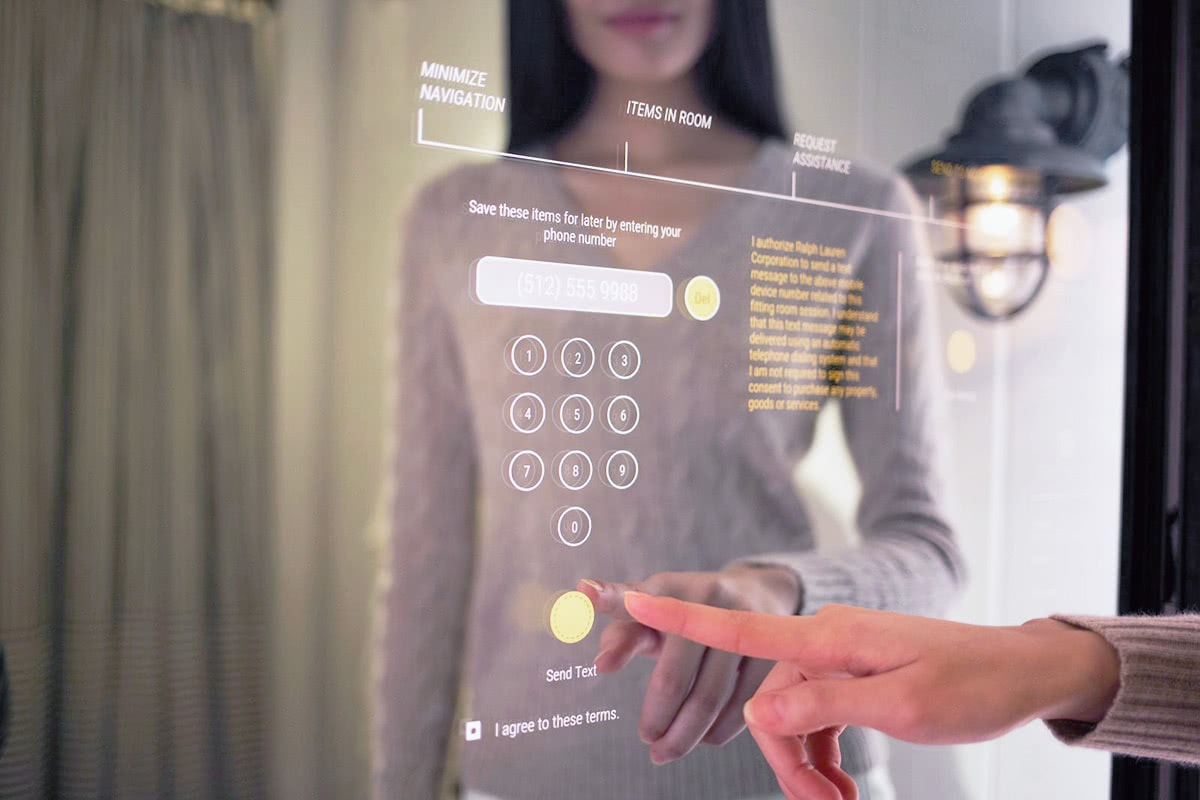
And it’s not just the fashion industry that technology is seeping into; world renowned cosmetics brand L’Oréal has introduced augmented reality makeovers in its Chinese and Korean stores. Shoppers can now walk right up to a concession stand and see exactly the product they want on themselves without even having to swatch it – its AR technology applies digital makeup through the mirror and even recommends products suited to you. Now that’s clever!

Technology is ever growing and constantly impressing all of us. We know technology today won’t be the same in a year’s time which I think is really exciting. Who knows, maybe my dream of being here the same time as flying cars really isn’t that far away…

Discover the Whiteoaks Difference